“No absolute best diet exists; no absolute best diet exists for anyone, but there is an absolute best diet at a specific time for a specific goal.”
-John Kiefer, Author of CBL
I first read Carb Back Loading or CBL back in 2013. It came from a CrossFitter, and at the time, I was in the frame of mind that everything coming out of that camp was lost and unprincipled. Over the last few years my mindset on this hasn’t changed too much, and the devotion with which this group of people tend to hold on to ideologies in the face of research and firsthand experience is disheartening. Nonetheless, I still love the problem of CrossFit and MMA, intelligently building multiple qualities that are in and of themselves generally mutually exclusive.
I also like re-reading books, and over the past weekend, I re-read The Belly Fat Effect by Mike Mutzel, MSc and then got back into Keifer’s Carb Back Loading in the next 24 hour block with a fresh and more open viewpoint. The books are almost the antithesis of each other in recommendations, and each have well over 500 references. If you then take into account The Adrenal Reset Diet, popularized by Dr. Alan Christianson, which somewhat flies in the middle ground of both diets, things get really interesting. How can three very well-known and well-respected authors come up with such different methodologies?
I believe it has to do with assumptions. Mutzel and Christianson are honestly assuming you are messed up. Keifer is assuming you are already a super-hero. One can see the allure of believing you are made of twisted steel and a pulsating onslaught of gains. But is this really the case?
Let’s look at the foundation of what Carb Back Loading is built on – insulin sensitivity and intact circadian rhythms. Most athletes (especially males as we have more lean body mass) who have been at it for some time will be able to take a pounding in the way of carbohydrates, however this is still highly individual (and testable). Yet, to assume that the majority of Americans have an intact circadian rhythm is laughable. We see and say this again and again, but…
“It is estimated that 92% of Americans have cortisol dysregulation.” Sara Gottfried M.D.
If you are living in this country and are a human, you are probably not Batman. If you do or don’t believe the preponderance of evidence that you are fallible, then get an adrenal stress index and a full workup from a functional medicine practitioner. Now most of you (maybe even all CrossFitters) will be in Stage II or Stage III Adrenal Fatigue. It may just be a side effect of our food, environment, and culture. We unknowingly burn out. That is not to say that the stages of Adrenal Fatigue founded by Dr. Hans Selye are the best model, but this is relatively unimportant. What is important is identifying dysfunction and then doing something about it other than pounding pastries.
If dysfunction is present, an even keel approach to carbohydrates consumption is likely the best tactic and there needs to be a good hard look at one’s current lifestyle. On the other hand, crushing the amount of caffeine and incendiary carbohydrates in Kiefer’s plan is probably going to wage war on your HPA axis (Hypothalmic – Pituatary – Adrenal Axis). You may even see results, but at what cost? And will they be maintainable long-term if you have thrown your already taxed body through the wringer?
So I just took away your Teddy Bear of fun carbohydrates and concomitantly told you that it is unlikely that you are healthy enough to indulge in the Carb Back Loading rollercoaster approach. This is because when we knock out the assumption of a normal circadian rhythm and/or adequate steroid hormone balance, the methodology crumbles. If we put these back in, it might have some ground to stand on. But please, please run some tests to make sure everything is in working order before you start inhaling 2,000 mg of caffeine a day and copious amounts of casein and sugar.
I know most of you are like…. “Compromise?! WTF - I want pizza and pecan pie. Pony Up. Go Hard or Go Home!”
I get it.
But let’s look at some other options and collect some data on the situation before we go HAM on some donuts. If you know you are not insulin resistant (favorable HbA1C under <5.3, Fasting Glucose under <83, OGTT score under <120 2hr post) then you are by all means a god among peasants in our country, as it is estimated that 30% of us are pre-diabetic, which is diagnosable insulin resistance. The number of people who are insulin resistant is, however, much higher as metabolic dysfunction starts far earlier than diagnosable pre-diabetes.
Hopefully, congrats 1 for 1.
If you are an athlete, you now have permission to crush copious amounts of items like bananas, sweet potatoes, parsnips, and maybe even white rice. If your training volume is high, you want to first find the range of carbohydrate consumption that supports you; a good range to start with is 30-40%. Space it out throughout the day and make sure to fuel yourself post workout as Keifer eloquently makes the very real case for taking advantage of this window. Not sure how this new Carb life is working for you? Buy a glucometer and test. I’d cover this, but Chris Kresser LAc has wrote the book on it - literally.
Ok, so you have fantastic blood sugar control, and you want to start tweaking things up. You want to tinker, but you got your Adrenal Stress Index back, and there is a lot to be desired. Well first things first, you need to look for food allergies, gut disturbances, environmental toxins, etc. You cannot out supplement a stress-ridden lifestyle or smoldering health problem. Period. It doesn’t work. What you can do is tinker with Dr. Christianson’s “carb back loading” regiment, which he has found to be very helpful with weight loss and adrenal fatigue. He is very good at his job, but the book is geared towards the general population, therefore, athletes will likely need to dial up the food and carb recommendations in his protocol.
The key to success is to collect data, formulate a plan, and then test what worked. I don’t think any of these authors would be against such a methodology. In fact, I bet all of them would want to help and take a peek under the hood.
In fact. I asked Mike Mutzel that exact question
@apacheathlete just curious if you have ever done a podcast or wrote anything on Carb Back Loading. It is coming out from multiple places right now and is the antithesis of your recommendations in the Belly Fat Effect. I think it would be a nightmare for anyone in the general population and most athletes, as we are making a huge assumption in that all the biological rhythms are functioning optimally. We don’t see that in hardly any of our athletes at first. BUT, if someone is running optimally and we know it and have tested it - the ideology is interesting.
@metabolic_mike from a research perspective there was one study in overweight Islamic women that showed more carbs at night altered the circadian rhythm of leptin-but it wasn’t linked with any weight loss. A few studies in endurance athletes have shown no increases in muscle glycogen and actually increases in fat mass. My perspective is you need muscle to get away with eating carbs. In brief-a super majority of ingested carbs are deposited in muscle (~80% of whole body glucose disposal), so if you don’t have a lot of mass for your frame or are not training very intensity, carb back loading will back fire. Could be great if you train really hard like you and I do. But most people don’t push themselves like that. In fact I’ve worked with many overweight folks in a clinical setting and they are already doing carb back loading-little or no food during day and biggest meal at night with lots of carbs-and they struggle losing weight. So my perspective is everyone is different. What works for me may not work for you or others. But for people that don’t have a lot of muscle and need to lose fat, there is simply nowhere for those carbs to go.
End Game - the top tier health practitioners and strength coaches all individualize and follow a data driven approach. You should be no different.
I was listening to a Naturopathic physician speak this past week and she said, “Everyone knows what they should and shouldn’t eat.”
Hold on what?
The food industry’s life work is confusion and burning pictures of attractive people enjoying high fructose corn syrup into the back of children’s minds.
Added fiber in my pop tarts…seems legit. Make it four.
I believe that people have no idea what they should and shouldn’t put in their mouths.
But this practitioner was from Canada and maybe all Canadian mothers are packing little organic fermentable lunchables for their baby Canadian children.
I doubt it.
We know that isn’t true in the good ol U S of A, we’ve done studies on their little lunches (it’s called lunch is in the bag and it was a 5 million dollar grant). I live in the fittest and healthiest city in America and a mom recently said to me, “soooo my boys are lifting weights now, they must need more peanut butta and jellies.” Both her youngsters are malnourished and whey a buck 0 five soaking wet. Her family’s diet needs a total overhaul, but she legitimately thinks she knows what to eat. Their family is probably eating very close to the government standards. Garbage.
You see the problem with making this ginormous assumption, that people know what to do. It’s like saying everyone knows what to do at the gym. Curls and Bench Press. Duh.
But, there is so much information out there at times we all can question.
Hell sometimes in the middle of the night I wake up freaking out that there may be some fatal flaw in my methodology - that maybe just maybe bagels are both nutritious and delicious. Then I think happy thoughts and remember that this is just the food pyramid talking and I go back to counting grass fed baby sheep.
So what should you eat and what shouldn’t you?
What are the three biggest changes you can make that will shut everyone the hell up and give you the most sought after grocery cart in all of Norf America!
1. Eat a vegetable and a quality protein with every meal. French fries, tomato sauce, and, chicken nuggets don’t count.
2. Avoid all processed food. If it’s in a bag or has a label throw that bitch away.
3. Eat a living fermentable food with every meal and wild caught cold water fish three times per week.
You knock out those “three” and you are ahead of most everybody in America, Austin, and probably Canada. But who goes there anyways it’s cold and they talk weird.
By Ben House, a bunch of letters
*Yes I took this one phrase out of context. Sorry. It needed to be done.
Austin is the fittest city in America and yet the availability in quality food absolutely stomps on the availability of quality fitness knowledge and training. In Austin, we have hundreds if not thousands of grocery stores, some giant, some baby and full of kale. We also might have more gyms than anywhere else in the country. I would stack most gyms in the run of the mill - HEB, Randalls, or Corner Market category – all the CrossFits, Lifetimes, and other Big Box gyms. There may be some decent stuff there, but if you take a look at what the majority people are buying it is going to be bullshit – processed everything, big Ag meat, and maybe even some big Ag fruits and veggies. I am making an enormous generalization, but if you sit at any one of these mainstream grocery stores (regardless of demographic) and take an objective look at what people buy…it will blow your mind.
When you wake up the same is true in the fitness realm except that most of the time people are completely unaware of the quality of the product they are purchasing. At least in the food realm we have equally mainstream documentaries like Food INC, Forks over Knives, and GMO OMG, which aren’t without their holes, but they do help to wake people up. Also, most everyone has read some book from someone about how they shouldn’t eat donuts and that red meat might be bad for them. This is equally worrisome, but at least people care.
So where do we fit in this weird grocery store analogy? I would put us and other gyms like Austin Simply Fit, Efficient Exercise, and Train 4 The Game in the Farmer’s Market, Coop, or Natural Grocers category (I may have missed a few, but not many – don’t shoot me). Honestly, Davis and I are probably a mini Farmer’s market with lots of weird items people have never heard of like Kefir, Beet Kavas, and New Zealand RibEyes. But, bottom line when you go to these types of establishments you have an idea of what your product is, where it came from, and why it will work.
Now you might be asking, well what about Whole Foods or Central Market? In the fitness industry we don’t have that. No big company has taken upon itself to really provide all levels of products, unbiasedly describe them, and then allow people to choose.
Why?
Because the general population’s fitness IQ is not high enough. They seek places that make them “feel” like they got a “workout”. In the words of Mike Boyle, “If you want me to make you sore, give me a bat!” Another problem is that any gym anywhere can get someone results in the first 6 months. You could go to the wiggle on the ground class, followed by 30 minutes on the moon machine, or you could go to the melt your face with push-ups and deadlifts class and depending on the person neither of these choices is best. Yet, lack of real knowledge is why these businesses can survive on a constant stream of EFTs and mainstream bullshit “fitness” strategies. America needs education. We need people to wake up to the importance of foundational movement, that MORE is generally not better, and the fact that exercise is a stressor that cannot and does not live on an island.
When I was 20 I started practicing at a Zen Center, during retreats we would eat in complete silence. One became aware of the loudness of their spoon or even their chop sticks. Your chewing was so loud it reverberated in your head and the flavors so exquisite you couldn’t help but smile and be thankful. Most religions have the practice of giving thanks before eating and from an even deeper ancestral viewpoint eating is a very tribal activity. This is not a coincidence and human beings have evolved to intake food in this manner. These practices are a means of increasing parasympathetic tone, which is responsible for secreting salvia, bringing blood to the digestive track, releasing digestive enzymes, and stimulating the enteric nervous system (the gut’s brain – yes it has its own brain) to move the food we consume down the tracks.
“Do you know, children, why I eat in silence? These grains of rice and sesame are so precious, I like to eat silently so that I can appreciate them fully.”
-Siddhartha
People seem to debate about the usefulness or science behind microwaves. I have given this up. A microwave is a tool that irradiates food and heats it incredibly fast. Yet, our body’s are meant to smell food and anticipate it. Heating our food in a pan takes precious time and we start to salivate and prepare mentally and physically to eat. It is also an opportunity to stop rushing and just be thankful. We live in a fast paced culture and we all can get in the habit of being on our phone when we eat, finishing that last project during lunch. Yet, this is not how we are designed to encounter food.
The importance of parasympathetic activation in the digestion of food is not debated, it is in physiology textbooks stated as fact, because it is. Yes it involves words like the vagal nerve, cholecystokinin, acetylcholine, and enteric plexuses, but that is just our way of complicating something that is inherently simple and that we practiced culturally and unavoidably until the 70s or 80s when the pace of our lives increased beyond anything we have seen in human history.
One of the scariest things for me and many others is that folks eat really healthy on paper, but it all comes out the other end. They fill their toilets with very organic and expensive partially digested food. However, anything we don’t digest is food for the giant colonies of little microbes who reside in our our intestines and this can be a great thing or the death of you depending on how much and what they get. See how I am already making an inherently simple topic more complicated. I love the science, the anatomy, the fancy words, but the ancients had understanding without the complexity and they knew exactly what to do. Let’s get stupid. Let’s slow down. Let’s be together and simply eat in mindfulness, thankful that we are here and have this opportunity to pound some gainz.
“We are very good at preparing to live, but not very good at living.”
“To be yourself in a world that is constantly trying to make you something else is the greatest success.”
- Emerson
This is how I view nutrition. You have to find your own way, yet if you are going to be successful you also have to follow some rules and start with a clean slate. Below are three insights that may help you stay on the path, whatever your path may be. If you are not on a path start down one with me as I will get into that towards the end.
1. The Protein Digestibility Corrected Amino Acid Score (PDCAAS) – is the best estimate of how useful a protein source is to the human body. It combines the amino acid profile and the true fecal digestibility of a certain protein source. Now if we are trying to augment performance, growth, pure human awesomeness why would we feed athletes or anyone peanut butter sandwiches on whole wheat bread. That’s right we wouldn’t.
Yet, insufficient calorie consumption is the number one nutritional problem in D1 athletics. I went to a talk in Kinesiology and the head of NSCA research gave Peanut Butter smothered Bagels as his bottom line solution to this problem. I puked in my mouth.
I don’t have time in my life to argue the legitimacy of a gluten - it is has nothing to offer and is like arguing with a three year old why they can’t live off lollipops and macaroni and cheese. I believe in human optimization and shitty protein (and carbohydrate) sources just don’t fit into that equation.
*the PDCAAS does not take into account anti-nutrient content so the numbers for grains and legumes are actually probably much lower. Reminder - peanuts are nut a nut, they are a legume. And nuts have a plethora of anti-nutrients despite what the paleo culture would like you to believe.
And now for the flip side of this, the homies who think that we evolved to thrive on a ketogenic diet and that they can fuel a high intensity lifestyle on coconut oil, coffee, and ground bison and not crash…hard.
“Glucose preceded fatty acids as a fuel source for living organisms by a very long time, and it is the building block of foods that have the longest evolutionary history of use by mammals like humans. The fact that glucose can be broken down in the body from protein is often used as an argument that we don’t need to eat glucose. But rather than viewing this as evidence that glucose isn’t important, we might view it as evidence that glucose is so metabolically essential that we evolved a mechanism to produce it even in its absence in the diet.”
-Chris Kresser L. Ac
*glucose is sugar. Well not really, sugar is sucrose which is a dimer of fructose and glucose. Let’s just say glucose = carbs (which isn’t really true, but kind of true enough for the depth of this post)
And finally for all you crazies out there that think you can gain weight and watch girlish your figure.
“To put on muscle and keep it is a very costly proposition for your body. It takes a tremendous amount of energy and resources and the body is very reluctant to add muscle, especially past a certain point. So you must convince the body that food is not only available but overly abundant.”
-Pavel Tsatsouline
I get blasted with nutritional questions every week. They are mostly about generalizations and I always try to bring the focus back to individualization. I have no idea how you will respond to whey protein or brown rice. That is for you to figure out. But some become frustrated and want to know all the answers right now. But that is just not how this game is played.
I recently had a client enter a session super pumped. She exclaimed, “I figured it out! I can’t eat as much fat in one sitting. It just doesn’t work well for me and fires up my GI symptoms.” This is a very high level tweak. This person has gone through an extensive elimination diet and is just starting to add things back in. She gets to play with not only food items but also amounts because she has earned it. She now gets to figure out how her body really responds to certain items. Without an elimination diet you are always guessing. You have to clear the slate for 30-90 days.
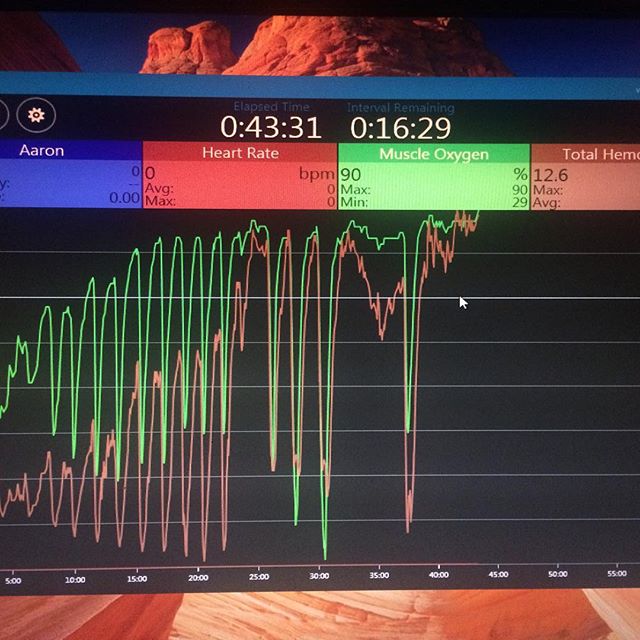
A provocation or elimination diet is still the gold standard for identifying Food Sensitives. We can run a Metabolic Reactivity Test (MRT) which is a blood test that looks at whether your body mounts an inflammatory reactions to over 150 food items but this is costly and for those with a lot of GI symptoms it probably will result in some false negatives and positives. Therefore, over the next 30 days I will be going through an elimination diet combined with a carb back loading protocol based on my individual blood glucose levels. I have not done this type of diet in two years and felt it was time to get back after it.
I invite you to join me on this journey and I will post what I eat every day to ApacheAthlete.com as I am not going to blow the TAE library up with all these posts.
Rules:
No grains, legumes, seed oils, dairy, sugar, artificial sweeteners, chocolate, or alcohol.
If your first response is well what about…? Stop it. You are not ready and that is ok.
If you want more information on this I would recommend the Paleo Cure by Chris Kresser. He is one of my favorite and sanest voices in the field and I know you will enjoy it.
Below are parts 1 and 2 from a lecture yesterday at UT. I have been given/paid for close to $400,000 in continuing education. This includes everything from teacher training to all the content issues I discuss in this talk. It is my sincere hope that this lights a fire under you to ask bigger questions and not just blindly trust a model of health that has the potential to kill you and then ask zero questions, as well as bankrupt our country.
People ask me why Train Adapt Evolve gives away so much.
The Answer.
Because we have to.
“The only thing necessary for the triumph of evil is for good men to do nothing.”
-Edmund Burke
…maybe a bit over the top, but maybe not.
Part 1
Part 2
By Ben House, Ph.D. Candidate, BA, FDN, fNMT,
* My first PT clients were when I was 19 and my father was pretty much the first person that I began to tweak diet and go down this whole eating rabbit hole.
** Fructose bypasses phosphofructokinase (PFK1) which is a highly regulated step of glycolysis not fructose 2,6 bisphosphatase which is a regulator of PFK1.







Recent Comments