Kind of strict Toes To Bar. I can do like 30 of these. Not bragging. It doesn’t matter. They just train hip flexor endurance. Stupid. Boring.
NOW. Get into a hollow hang position with a foam roller between your ankles and execute a PRI/Russian Breathing Strategy – exhale slowly and viciously with the tongue on the roof of your mouth and brace like you are going to get kicked in the liver by Tommy Reardon. You will feel your inner abs get ridculously tight. Now pull your sphincters/pelvic diaphragm up – AKA act like you are preventing yourself both peeing and pooping. Giggles. Now, squeeze the shit out of the foam roller. Finally, holding your exhale try to move your legs without losing this position.
Yea that is ab work. Suck it up and work for the next year to do 5 perfect reps.
When I was a wee lad I saw a 120 pound lady hold a plank for 7 minutes. She was weak, puffy, and soft. 100s of reps of GHD situps or Kipping Toes To Bar may be even worse for people that want to lift heavy shit. If you want your midline to be strong and hold up to anything stop using the word core. You also must learn how to brace and create tension. If you are lifter breathing under load is one of the biggest aspects you are leaving on the table, if you are fighter learn to breathe behind the shield. Yet, you can not learn this while lifting or fighting, you have to practice and perfect it outside of your sport. Enjoy the ride. Make it suck.
“Don’t see how many reps you can do, see how few you can do!”
-Steve Maxwell
In this new you tube world of fitness it is easy to slough off the fundamentals. This leaves the veterans of the iron game laughing at us young bucks and our gizmos and triplane movement (sometimes they should). Yet, we are not the same population of the 60s-80s. We live in a world full of iPads and lack of play, people will walk in your gym with very little general preparedness and thus we have to reteach them how to move. How to load the hip. How to pack a shoulder. How to stabilize. How to create tension…How to crawl.
*And if you think the answer to this is a CrossFit Elements class – go home – You’re drunk on thrusters. We have evaled all of them and the compensation patterns will make your head spin. They are finding a way to get the job done in the name of performance, fiddling with parts on a speeding car. Not good. Not built to last.
Back to the fundamentals, think about the best chefs in the world, they take simple ingredients and make them blow apart in your mouth. One can get creative in the appetizer or dessert portion, but don’t fuck with my ribeye.
Same goes for our exercise selection. Train Adapt Evolve has an exercise library of well over 200 movements, but the main course is always simple, dirty, and delicious – this goes for lifting and our conditioning. Our clients become savants at the fundamentals. We have 45 year old women who don’t think twice about a single leg squat or body weight deadlifts for reps because they have built up their foundation over time - in Coach’s Davis’ words they are Anti-fragile. Built to last.
Here are our main course options in the order of progression
Speed and Power:
Medballs/Sandbells
Jumping/Plyos
Olympic Lifts
Squat:
Split Squat/Lunges
Rear Foot Elevated Split Squat
Front Squat
Back Squat
Hinge:
Reaches
Bridge
Deadlift
Vertical Pull:
Lat Pulldown
PullUp Horizontal Pull:
Stance Phase Cable Row
DB Row
Bent Over Barbell Row
Vertical Press:
Landmine Press
DB/KB Press
Barbell Press
Horizontal Press:
Db/KB Bench/Pushup
Bench
That’s it.
The other 175ish exercises are integral regressions and progressions and they have their place in the warm-up and general strength work. They only function to build the ability to do the common – uncommonly well.
Not everyone is going to need to pile wheels on a back squat, but every human has to be able to load each hip.
Not everyone has to barbell press a Mac truck, but everyone needs to exhibit full shoulder mobility and stability, as well as be able to create tension in the system. How we get there looks different for each client, but the objective is always the same.
Some think this ideology is boring and inside of an ADD culture this makes sense. This is the reason why EXTREME fast forward exercise systems have gained such popularity over the last decade, yet they are now faltering because many people injured or realize that they are being driven to the middle and can’t improve past a novice ability because they have not built a solid enough base to add anything on top. They are addicted to constant variety in time domain and exercise selection. But please don’t convince yourself you are doing anything productive by incessantly switching it up.
Changes/slight tweaks in your programming are important and make training life worth living. But for most they either become obsessed with finding the perfect program and then jump around like a 3 year old in a toy store, or they end up giving zero shits and just do whatever fits their fancy on that particular day and create a system of chaos and disorder inside and out.
This same no bullshit fundamentalist ideology goes for our conditioning. Get really good at blasting something out in 15 seconds. Be able to go places no one else can go and if for some reason you want to be healthy or want the ability to endure, build up your aerobic power through increased cardiac output work. After you have built up these bases of movement and general preparedness then you can play in other domains, you have earned that right. How long will this take? Three months. Three Years. Maybe the rest of your life. Depends on your goals, how patient you are, how beat up your aerobic motor is, and how ridiculous your movement compensations are.
To finish, the philosophies of Variety, Tri-Plane Movement, Gary Gray, and The Postural Restoration Institute are unbelievably powerful tools in the evaluation and progression of athletes. But, as strength coaches we cannot lose sight of the forest for the trees. We have a job to do and the majority of the time that job is simpler than it is complex, the hook is can you stay the course and are you well versed enough in the fundamentals to get them results so they keep playing the game.
I can’t say enough about Nassim Nicholas Taleb’s book Antifragle: Things That Gain From Disorder. Too many takeaways to write in one post. But In the book Taleb explains different states of systems or structures as…
Fragile: Handle with care. Weakens under any stress or disorder.
Robust: Neutral - doesn’t matter whether there is stress or disorder. It’s built to last. Doesn’t weaken or get stronger.
Anitfragile: Strengthens under disorder. Taleb references the greek myth Hydra ‘’Cut off one head, Two more shall take its place”.
Our goal is to make Antifragile systems within the body.
It’s common to think of this as athletes preparing for a competition - with their new found antifragility improving his or her performance in competition. But for our general population clients, couldn’t an increase in quality of life be a favourable outcome as well?
As we age, our life is the ultimate time-under-tension. The longer we are alive the longer we are subjected to disorder, stress, caos. If we - as health and strength coaches can make our athletes/clients ironclad to not only competition stressors but to life stressors, would that not be a noble pursuit?
We believe so.
Stress
Even seeing the word “stress” can summon negative connotations. Yet as strength and conditioning coaches, stress is our tool to elicit change — systematically applying stress to an organism to elicit a positive adaptation.
There is duality within stress (Fragile / Antifragile) explained as a fundamental law called hormesis in biology.
“Hormesis is a biphasic dose-response phenomenon characterized by low-dose stimulation and a high-dose inhibition.” -Edward J. Calabrese
By applying just enough of a dose - for this example stress induced by strength training - we will see a positive response (strength/hypertrophy).
An inadequate dose might not perturb the system enough — therefore the response might not move from the control (no gainz).
There is also a third possibility: not dosing at all - or the complete absence of a stressor (deterioration).
This is ever present in coaching as we try to fit our nicely planned (though at times faulty) periodization schemes (such as Block or Linear periodization) into a competitive season, dedicating blocks of work towards certain qualities while completely disregarding others in the cycle - and yes I understand residual effects and tertiary work. But isn’t that just lowering certain biomotor qualities “overall volume or intensity” in a vertical integration or a complex model? (Parable of the Blind Men and the Elephant)
This lack of stress is also the root cause of aging - “use it, or lose it”. We already have enough evidence that muscle mass can be maintained to a certain degree and even in some cases gained as we age. Brain plasticity is still functioning as well. So what gives?
As we age we seek out comfort. Life without disorder. This leads to fragility.
You just exist.
Growing up in the heart of the midwest, I became accustomed to watching elders of mine. Retire to La-Z-boys -their sharp minds wasted away from the white noise of the TV. I have seen 15 years go by in this existence.
The goal as we age is to seek a bit of disorder. To challenge our body, mind, and soul - and not lose the ability to adapt.
“The biopsychosocial model is a general model or approach stating that biological, psychological (which entails thoughts, emotions, and behaviors), and social (socio-economical, socio-environmental, and cultural) factors, all play a significant role in human functioning in the context of disease or illness. It posits that, health is best understood in terms of a combination of biological, psychological, and social factors rather than purely in biological terms.”
Thanks Wikipedia.
As coaches we talk about this model. We see this as the future of our profession- and rightly so. We are only 30 years behind the other sciences in this line of thinking (Dynamic Systems, Cross-disciplinary approaches).
Boiled down, this is a “Generalist Approach”
Us coaches - we are very good at talking. We talk, and talk, and talk. Yet we still cling to our reductionist ways or our specialty, ignoring the value of looking at the bigger picture.
If your speciality is Olympic Lifting - Olympic Lifting will solve all the worlds problems. If you are a speed guru- “Speed Kills”,if you are a nutritionist - its all about the Gut. Sports Psychologists - Writing Goals, Physical Therapist - Correctives… and the list goes on.
I am being a bit shortsighted but you get the point.
There’s great value in specialists, hence why we pride ourselves in finding the best in Austin to include in our network (Physical Therapists, Chiropractors, Doctors, etc.) — but Ben and I are Generalists — with common sense.
We realize that humans are complex and to truly be good at what we do there needs to be fluidity in our coaching, seamlessly transitioning in and out of being the Strength Coach, Nutritionist, Psychologist, and Physical Therapist.
Common sense (referring out) comes into play when…
Problems arise outside the fundamentals found in each discipline.
Incoming movement or joint assessment are outside our scope or time frame
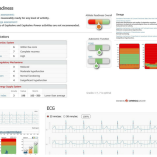
When there is need for thorough medical consultation after we have assessed an athlete via Omegawave.
For us a life of specialization lends itself to blindness when comprehending the bigger picture. Much like the parable of “The Blind Men and the Elephant.”
The Generalist mindset is not a common one in our American culture. A good overview is this article about Cognitive Scientist Richard Nesbitt, looking at the differences in East and Western cultures.
“He embarked on a project to probe the thought processes of East Asians and European Americans. His experiment presented subjects with a virtual aquarium on a computer screen.
“The Americans would say, ‘I saw three big fish swimming off to the left. They had pink fins.’ They went for the biggest, brightest moving object and focused on that and on its attributes,”
“The Japanese in that study would start by saying, ‘Well, I saw what looked like a stream. The water was green. There were rocks and shells on the bottom. There were three big fish swimming off to the left.’”
* American = Specialists: Immersed in a single object. Narrow focus.
* Japanese = Generalists: Comprehensive. Interaction of all the elements presented. Broad Focus.
Train Adapt Evolve is always being pushed to specialize. Being a new business, I suppose it comes with the territory. But if ‘health is best understood in terms of a combination of biological, psychological, and social factors rather than purely in biological terms’ we won’t be specializing anytime soon.
Words for Future Generalist
- Find the “essence” in each discipline. Focus on the fundamentals, don’t completely get lost in the complexities.
- Books give you context but spending time with great coaches/therapist will allow access to their successful habits. Find out what the best do well, imitate, then make them your own.
- You will hear more No’s than Yes’s - Be Resilient.
- Ask yourself - is this a Job or a Passion? If it is a passion, learning will be life long. Passion means it is your art and ARTISTS STEAL - from everywhere.
“Push your hips back. No really push your hips back!”
“Your elbows need to be high and outside. No for real keep your elbows high and outside!”
Sometimes people need verbal coaching, most of the time they don’t. Directions? Yes. The perfect cue? No.
Davis and I don’t fill the gym with fluffy cues and pom poms. We fix movement and then reteach with tons of quality reps. We do this in a variety of ways but they all involve changing the length/tension relationship of the system, whether that be soft tissue work, stretching, activation exercises, some type of regression from the original movement, or some combination of these tactics. The point being, we spend very little time on the actual problem itself and instead constantly seek a solution.
But what if I just yell the cue louder, will they get it? Nope. Sorry you have to teach the person – mind and body how to move and cueing is not teaching.
If you are a coach and you find yourself getting frustrated because your cues aren’t working, I would think outside the box and get educated on other tactics from the field.
If you are a frustrated client, I would challenge your coach and ask what else you can do to fix this problem besides being referred out.
For higher level movements like the Snatch, a tight bar path isn’t just going to happen with some words you read on the internet once. Let’s make a list of just five of the qualities that a human being needs to have a shot in hell at hoisting a barbell overhead like Xiaojun Lu.
A brain that works
A foot that can load and explode into the ground
Ankle Dorsiflexion (or a talus that can go down and in because the foot can load and explode into the ground – I will stop that for now)
The ability to move both hips posteriorly while keeping a neutral or extended spine and engaging the hamstrings AKA pelvic control.
Full glenohumeral internal rotation and flexion which is dependent on an ability to fill both chest cavities with air.
And then after you have gotten all these movement qualities dialed in you will have to light up the neural pathways. What does that mean? Perfect Practice. Again and Again and Again.
But bro that’s not fun.
Have you ever watched the Chinese? Weightlifting doesn’t look fun. They are not smiling. They are perfect and a coach is standing somewhere in the distance with an apathetical look on his face. Paint the fence Daniel son.
They smile when they win gold medals.
Training and learning is an arduous process and yet it can be fun. But entertainment cannot be the goal.
If you want just the right cue or a himbo cheerleader don’t sign on with Train Adapt Evolve. If you want to improve and know in your very bones that you are faster, stronger, more powerful, and more mobile then sign on. If your self-worth is dependent on how much weight is on the bar or a smile from across the gym then stay exactly where you are.
I was told once from a prominent coach in the CrossFit world that “adrenal fatigue is part of the game.”
He then showed me proof. Numerous lab results from multiple athletes with low cortisol levels and blood that resembled more the unhealthy or elderly — rather than healthy. Yet all of the athletes were able to compete. showing no signs unless you knew what to look for.
It was then suggested that for the athletes to compete they need to support the adrenals (via herbal supplementation).
Makes sense.
But it ate at me.
Why go through the trouble to plan workouts, have periodization, and worry about dose responses? If “Fatigue/Psuedo Performance ” is the only outcome — isn’t the dose too much? Or is it our job to pretend we are not overdosing and to do it anyways — and capitalize on small infrequent gainz, even though the foundation or support systems are crumbling from within?
I asked myself these questions and many more.
Then began to research and experiment.
I failed. I failed, and I failed.
Each time I would learn something new. Write it down and put it away. I have extensive notes on my failures — gentle reminders.
March of last year I started working with the Omegawave team system, a month later began testing all of the CrossFit Austin competitors heading to regionals. Soon after I was hired to coach the team for the 2015 season.
This gave me a unique opportunity to work with a group of highly motivated athletes. The core group are veterans having competed at the regional level for the last 3 years. As well as a crop of athletes just starting their competitive journey. In total we have 20+ athletes.
To be honest I thought they all would quit.
It was such a big departure from mainstream CrossFit.
All athletes are monitored via Omegawave. Structural integrity is assessed using PRI principles. I administer soft tissue when needed via movement assessment or athlete feedback and above all I stick to a strict methodology when programming.
Periodization, Health, and Hypertrophy
Simply we program in 3 week cycles and periodization follows a complex model.
Our cycles last three weeks because..
It allows us to work at higher intensities more often throughout the year, but it also means we deload every three weeks. Higher work intensity = More frequent recovery
Short cycles force us to make hard decisions. We only work on the necessities. Increase Strength Reserve and Increase Aerobic Profile (Alactic-Aerobic, Anaerobic-Aerobic, Aerobic)
Each cycle also allows us to run through Omegawave data and performance results to see if adjustments need to be made. We run the full Omegawave test to make sure we have recovered the Hormonal System (HPA Axis) at the start of each cycle.
This allows us to manage volume and to never add more than we can handle. We never want to drift into adrenal fatigue or a system under chronic stress. This should never be the norm. Chronic stress on the brain alters its structure and function. Increasing brain fog (memory loss), overactive sympathetic nervous system, loss of behavioral flexibility, and can increase autoimmunity — this can happen even in the perceived fit population.
Chronic Overtraining has a price.
Keeping the hormonal system in check we have seen increases in hypertrophy across the board. This has been accompanied by strength gains — even 10kg+ Personal Bests for the veterans in Olympic lifts, Squats, and Presses.
The emphasis on aerobic work and recovery has also shown positive changes in the Omegawave Data.
Omegawave Data
*Combined Men and Women Averages
Before
After
Aerobic 115
Aerobic 123
CNS 9.4 mV
CNS 19.3 mV
RMSSD 59
RMSSD 72
Programming Do’s and Don’ts
Always respect the synergistic effect of the Alactic, Anaerobic, and Aerobic systems being trained concurrently (Complex Methodology)
Always respect the synergistic effect of Max Strength, Speed-Strength, and Hypertrophy as it pertains to increasing strength (Complex Methodology)
“Never do a burpee slow” — Never slog through work. Training is unbroken and at performance speeds (FT fiber fatigue resistant).
If technique fails — Stop
Limit Anaerobic work to under 60 seconds (FT Mitochondria? - conflicting research on both side of this)
Use Static-Dynamic work to elicit structural adaptations needed to support strength endurance (Increase capillaries and sarcoplasmic content, improve connective tissue, ST fiber hypertrophy)
Do not do Max Aerobic Power training when trying to elicit aerobic heart adaptations
If its important, do it often (skill work, gymnastics,specific warm ups)


Recent Comments