
Carb Back Loading – The Fatal Flaw - Proceed With Caution
“No absolute best diet exists; no absolute best diet exists for anyone, but there is an absolute best diet at a specific time for a specific goal.”
-John Kiefer, Author of CBL
I first read Carb Back Loading or CBL back in 2013. It came from a CrossFitter, and at the time, I was in the frame of mind that everything coming out of that camp was lost and unprincipled. Over the last few years my mindset on this hasn’t changed too much, and the devotion with which this group of people tend to hold on to ideologies in the face of research and firsthand experience is disheartening. Nonetheless, I still love the problem of CrossFit and MMA, intelligently building multiple qualities that are in and of themselves generally mutually exclusive.
I also like re-reading books, and over the past weekend, I re-read The Belly Fat Effect by Mike Mutzel, MSc and then got back into Keifer’s Carb Back Loading in the next 24 hour block with a fresh and more open viewpoint. The books are almost the antithesis of each other in recommendations, and each have well over 500 references. If you then take into account The Adrenal Reset Diet, popularized by Dr. Alan Christianson, which somewhat flies in the middle ground of both diets, things get really interesting. How can three very well-known and well-respected authors come up with such different methodologies?
I believe it has to do with assumptions. Mutzel and Christianson are honestly assuming you are messed up. Keifer is assuming you are already a super-hero. One can see the allure of believing you are made of twisted steel and a pulsating onslaught of gains. But is this really the case?
Let’s look at the foundation of what Carb Back Loading is built on – insulin sensitivity and intact circadian rhythms. Most athletes (especially males as we have more lean body mass) who have been at it for some time will be able to take a pounding in the way of carbohydrates, however this is still highly individual (and testable). Yet, to assume that the majority of Americans have an intact circadian rhythm is laughable. We see and say this again and again, but…
“It is estimated that 92% of Americans have cortisol dysregulation.” Sara Gottfried M.D.
If you are living in this country and are a human, you are probably not Batman. If you do or don’t believe the preponderance of evidence that you are fallible, then get an adrenal stress index and a full workup from a functional medicine practitioner. Now most of you (maybe even all CrossFitters) will be in Stage II or Stage III Adrenal Fatigue. It may just be a side effect of our food, environment, and culture. We unknowingly burn out. That is not to say that the stages of Adrenal Fatigue founded by Dr. Hans Selye are the best model, but this is relatively unimportant. What is important is identifying dysfunction and then doing something about it other than pounding pastries.
If dysfunction is present, an even keel approach to carbohydrates consumption is likely the best tactic and there needs to be a good hard look at one’s current lifestyle. On the other hand, crushing the amount of caffeine and incendiary carbohydrates in Kiefer’s plan is probably going to wage war on your HPA axis (Hypothalmic – Pituatary – Adrenal Axis). You may even see results, but at what cost? And will they be maintainable long-term if you have thrown your already taxed body through the wringer?
So I just took away your Teddy Bear of fun carbohydrates and concomitantly told you that it is unlikely that you are healthy enough to indulge in the Carb Back Loading rollercoaster approach. This is because when we knock out the assumption of a normal circadian rhythm and/or adequate steroid hormone balance, the methodology crumbles. If we put these back in, it might have some ground to stand on. But please, please run some tests to make sure everything is in working order before you start inhaling 2,000 mg of caffeine a day and copious amounts of casein and sugar.
I know most of you are like…. “Compromise?! WTF - I want pizza and pecan pie. Pony Up. Go Hard or Go Home!”
I get it.
But let’s look at some other options and collect some data on the situation before we go HAM on some donuts. If you know you are not insulin resistant (favorable HbA1C under <5.3, Fasting Glucose under <83, OGTT score under <120 2hr post) then you are by all means a god among peasants in our country, as it is estimated that 30% of us are pre-diabetic, which is diagnosable insulin resistance. The number of people who are insulin resistant is, however, much higher as metabolic dysfunction starts far earlier than diagnosable pre-diabetes.
Hopefully, congrats 1 for 1.
If you are an athlete, you now have permission to crush copious amounts of items like bananas, sweet potatoes, parsnips, and maybe even white rice. If your training volume is high, you want to first find the range of carbohydrate consumption that supports you; a good range to start with is 30-40%. Space it out throughout the day and make sure to fuel yourself post workout as Keifer eloquently makes the very real case for taking advantage of this window. Not sure how this new Carb life is working for you? Buy a glucometer and test. I’d cover this, but Chris Kresser LAc has wrote the book on it - literally.
Ok, so you have fantastic blood sugar control, and you want to start tweaking things up. You want to tinker, but you got your Adrenal Stress Index back, and there is a lot to be desired. Well first things first, you need to look for food allergies, gut disturbances, environmental toxins, etc. You cannot out supplement a stress-ridden lifestyle or smoldering health problem. Period. It doesn’t work. What you can do is tinker with Dr. Christianson’s “carb back loading” regiment, which he has found to be very helpful with weight loss and adrenal fatigue. He is very good at his job, but the book is geared towards the general population, therefore, athletes will likely need to dial up the food and carb recommendations in his protocol.
The key to success is to collect data, formulate a plan, and then test what worked. I don’t think any of these authors would be against such a methodology. In fact, I bet all of them would want to help and take a peek under the hood.
In fact. I asked Mike Mutzel that exact question
@apacheathlete just curious if you have ever done a podcast or wrote anything on Carb Back Loading. It is coming out from multiple places right now and is the antithesis of your recommendations in the Belly Fat Effect. I think it would be a nightmare for anyone in the general population and most athletes, as we are making a huge assumption in that all the biological rhythms are functioning optimally. We don’t see that in hardly any of our athletes at first. BUT, if someone is running optimally and we know it and have tested it - the ideology is interesting.
@metabolic_mike from a research perspective there was one study in overweight Islamic women that showed more carbs at night altered the circadian rhythm of leptin-but it wasn’t linked with any weight loss. A few studies in endurance athletes have shown no increases in muscle glycogen and actually increases in fat mass. My perspective is you need muscle to get away with eating carbs. In brief-a super majority of ingested carbs are deposited in muscle (~80% of whole body glucose disposal), so if you don’t have a lot of mass for your frame or are not training very intensity, carb back loading will back fire. Could be great if you train really hard like you and I do. But most people don’t push themselves like that. In fact I’ve worked with many overweight folks in a clinical setting and they are already doing carb back loading-little or no food during day and biggest meal at night with lots of carbs-and they struggle losing weight. So my perspective is everyone is different. What works for me may not work for you or others. But for people that don’t have a lot of muscle and need to lose fat, there is simply nowhere for those carbs to go.
End Game - the top tier health practitioners and strength coaches all individualize and follow a data driven approach. You should be no different.
By: Ben House, Ph.D. Candidate, FDN, fNMT
Just Because You Can, Doesn’t Mean You Should.
This weekend I watched a 14 year old girl take on the last workout of the 2015 CrossFit Open.
She killed it.
Every onlooker I stood next to had something to say. Some envious of her opportunity — finding CrossFit so young. Others in awe of the youthful energy and determination.
As I listened to the comments I thought ‘this is such a slippery slope’.
They look at her and say “this is great for youth athletes!” and I totally understand that mindset - especially if contrasted to the backdrop of physical education provided by our schools, which I refer to as “Zombie Walking”.
Spending time at the public high school track midday coaching sprinters, I get the pleasure of witnessing “P.E.” class 5 days a week.
It is the adolescent version of the walking dead. 40+ kids shuffling their way around the track where soft drinks from Whataburger, donuts, and Chick-fil-a breakfast sandwiches all make an appearance. This is all under the supervision of not one teacher but 2 or 3 — standing at the finish line ‘shooting the shit’.
Of course when weighing the two options, Zombie Walking vs. CrossFit — CrossFit wins every time in my book. So I can understand why a 14 year old easily handling a CrossFit workout is deemed “good”. But let us not make the mistake that a single performance is a direct measure of health, or better yet, insight to the long term development of the athlete.
As I watched her move I saw common patterns we see in adult athletes that have been in the fire for some time; excessive extension of the low back, prominent humeral internal rotation, overdeveloped upper traps, elevated shoulders — noticeable downward rotation of the scap on the left, lack of upper rotation of the scap on the right, and as she bent over to pick up the bar (imagine a Toe Touch) the right superficial back line was overly developed than left.
Now the kicker is she is preparing for softball and volleyball.
We can argue what came first, the chicken or the egg, and I will admit we have seen baseball players with similar shoulder position and movement. Regardless of causation I would argue this not the appropriate path for long term development.
Theoretically, she has 7-8 years left of playing. If there’s one thing I have learned working with youth athletes it is you stick to the fundamentals and the majority of the time you are the little dutch boy with your finger in the dam. Not only are you getting them prepared for their sport but also practice.
Yes we are preparing them for practice.
We don’t know what their coaches will pull out of the hat. One day could be a 2 mile run because a couple kids were acting up, the next jumping activities holding weights in their hands (yes you read that right — Middle School, in fact).
Now add CrossFit style workouts on top with average to great coaching and you still won’t be setting the athlete up for success.
I am pointing a lot of fingers but college isn’t getting any cheaper. Their needs to be a shift to long term development with our youth athletes. If you have no clue what you are doing refer out. If you think Mobility Wod will save her, think again.
Coaches, it’s not about you. And it’s not about how well they perform now. It’s how well they perform years down the road when your name is not attached.
By: Aaron Davis
Go Home Canada - You’re Drunk
Composing Fitness: Beauty That Lasts
People don’t think of programming as beautiful. Its reps and sets on a piece of paper or google doc. Yet, if you look at a score of music it isn’t especially striking either, lines and different kinds of notes in an order. My mother is a professor of music at the university level and I never gave music any respect when I was younger and still don’t have the appreciation for it that many in the industry do. But music is much older than the performance sports science industry. It has had time to evolve.
First, let’s think of how young children learn music. They learn the notes. They learn to read the music. They practice cords and simple songs until they have them down perfectly. They learn the fundamentals and then they layer on new skills. Now what if we had this same type of structure in physical education or even accepted privately across the country. Yes, we have baby sports, dance, and gymnastics, but very rarely are these time commitments filled with movement fundamentals. This was probably the main reason the USSR was so successful in the cold war era – sports schools on every corner that built foundational general physical preparedness.
Now let’s think of how music is made and presented to the public at the highest of levels – the symphony. First we have the composer who writes what instrument will do and when. This may be music written by a composer like Beethoven, Rachmaninov, or Mozart, or it may be a new age or current composer. Each instrument in the symphony has a different part to play and the composer’s job is to use each instrument’s unique abilities and then allow them come together to produce something delicate, forceful, and stunning.
“The composer must know the full capabilities of each instrument and how they must complement each other, not compete.”
-Elizabeth Swados
Furthermore, the first chair violin doesn’t have the same score of music as the fifth chair and hopefully they don’t bicker and slap each other with their incredibly expensive pieces of wood. The director’s sole job is to keep the melody, harmony, and the peace – to direct who is to play when and at what volume. The director is also the leader and manager of this merry group. Sometimes the director may even compose music, but far more likely is that they pick works of art that accentuate their group’s abilities.
Now what do we see in fitness, everyone wants to play as loudly as possible all the time!
Banging on drums and blaring through horns with a lack of appreciation for practice and the fundamentals. Tone deaf directors who don’t respect the significance of athlete management and individuality and the fact that there must be crescendos and lulls in a performance, a training block, a year of programming, and even an athlete’s entire career. We have genius but relatively young researchers, scientists, and composers. It is a very new and noisy world and we have forgotten the power, beauty, and necessity of silence and individuality.
“After silence, that which comes nearest to expressing the inexpressible is music.”
-Aldous Huxley
Nothing about music on any level is easy. It takes constant practice and honesty with one’s self and the same goes for high levels of sport.
Now maybe the ancients had it all figured out. They moved throughout the day, hunted, carried, feasted, and then sat around the fire together singing and laughing. It may be great to go back to those times while bringing along items like the internet, free speech, and maybe even antibiotics. But we can’t. We live in the now and thus our first job is opening people’s minds to the noisiness of their lives, the lack of harmony. As composers and directors we have a responsibility to look at the parts of the whole and how they play together, this goes for teams and biological systems within each individual. This job is much harder than writing something loud and random on a white board for all to do. It is about creating something delicate yet powerful, something forceful yet yielding, something beautiful that lasts.
By: Ben House FDN, Ph.D. Candidate
Weightlifting: 90 degree Squats & Muscle Slack
This week I got a chance to catch up with Thomas Lower of Lower Weightlifting. Our conversations in the past have always influenced my coaching and methodology on weightlifting and this meeting did not disappoint.
While we were talking about squat depth, lumbo-pelvic control, and injuries he rattled off a great quote from World Record holder IIya IIyin:
“Americans catch with ligaments, we catch with muscle”
“We” as in the rest of the world I take it.
Probably a gross simplification from Ilya, but in his defense if you travel around the U.S. visiting Crossfit gyms presenting seminars you are probably right in saying so.
Ah hell — maybe he is just right.
Kidding.
So we know the butt wink happens both in squats & the receiving position. I am not going to rehash that topic, it has been discussed ad nauseum on the web.
I am more curious about the repercussions of the butt wink if left unfixed (but please fix it). Specifically what’s happening to the elastic components of the muscles of the low back.
Muscle Slack?
The term muscle slack is stolen from a Dutch Coach/Biomechanist Frans Bosch. Simply it means the “time before you feel the elastic stretch”. If too much time passes (fractions of a sec. — but time nevertheless) before tension is created in a stretch — there is too much slack in the system. The rubberband never gets pulled back — no free energy.
An example of the elastic stretch happens during the first pull of a Snatch or Clean. As we move the knees back to vertical there should be an elastic stretch of the hamstrings — preloading them with elastic energy which will assist the second pull.
This stretch-reflex lessens the responsibility of the low back to generate force during the second pull. It’s our experience that women in particular struggle with this stretch-reflex of the hamstrings. Which is the cause of many low back problems.
The same problem can happen to the low back from the butt wink or loss of pelvic control. If pushed too far you can lose the ability to generate enough tension to support the back.
This is why we recommend adding squats to 90 degrees in the offseason. I should say its not just squatting to 90 degrees that counts but that fact we accentuate the eccentric and isometric portions of the lift.
“WTF — 90 degrees?”
Save your sticks and stones — and hear me out.
I have always viewed sprinters and weightlifters as sports cars. Speed + Control. A certain precision is needed in both sports. This is expected in specific movements, programing, and performance therapy.
So when I ask an athlete to squat to 90 or work on controlled isometrics I am asking the athlete to exhibit control, while simultaneously accomplishing my underlying objective which is taking up the muscle slack they created by free-wheeling to the bottom of their squat for the last bizzilion months (catching on ligaments = no control).
Of course as the program goes on we will inch our way back down “Ass To Grass” exhibiting control.
Ways to take up Muscle Slack:
- Plyometrics (weighted for experienced athletes < 30% of BW)
- Iso/Eccentric Tempo Squats to 90 degrees
- Iso/Eccentric Hamstring Exercises
This isn’t something new but something I stole from reading Anatoliy Bondarchuk Olympic Manual for Size and Strength as well as dissecting “New School” Russian Weightlifting Programs.
Fix the slack, improve efficiency, and don’t get injured!
Simple.
By: Aaron Davis
Tension - Life Or Death
I sometimes go to Yoga classes, but I don’t really do any of the poses. It looks like this.
But definitely, not this.
or even this.
Truly, I am there for the music, relaxation, and positive vibes. Once the yoga teacher asked, “Why I don’t try harder.” I responded, ”I live and die off tension.” She laughed courteously and made some sort of off handed joke as this ideology was completely foreign to her. Like it or not, as a weightlifter or just a human being you are a huge network of length tension relationships. Perhaps, the best example for this is the pelvis – which is three bones fused together, without muscles, ligaments, and fascia it would just float around somewhere in our midsection. Luckily not many of us are balls of jello with bones like mandarin oranges.
To keep things simple, let’s think of the pelvis as the mast of a ship. What keeps that mast from buckling to one side or the other – equal tension from each direction. On the front of your pelvis you have the hip flexors (again oversimplifying here). On the back you have the hamstrings. If the hamstrings get too loose (past 90 degrees in a straight leg raise) your pelvis will tip forward (anterior pelvis tilt) and give the hip flexors leverage. They will pull you farther into this anterior pelvis tile or extension, your breathing patterns will or were all effed up and this will keep pulling you forward. You could also be a person where both sides of this mast are too tight and now there is just too much tension and you are probably very fragile – in this case specific yoga movements may be a great idea for you (to a point) because you are a walking, talking ball of knotted up nastiness that needs some body work and a lot of foam rolling and pointed mobility work.
Back to the yoga teacher who had zero hamstring tension…zilch.
Feet to head, yet she didn’t even feel this was enough and she is not alone. She was asking me about a pain in her Left Hip which was directly caused by a lack of bilateral hamstring tension and thus a pelvis that was pitched forward (and oriented to the right) and creating a host of problems down the chain – the hip and ankle primarily.
This idea is so foreign to her that it may never take hold. Wait I need tension?
Yup!
Now yoga is not alone in this land of overstretching – if you eval any female gymnast you will find the same thing and if you are really interested in this topic check out this post from Steve Cuddy which was in last month’s issue of Austin Fit. Now these overstretched anterior pelvic tilt humans/athletes may not become pathological (have problems or pain) for a quite a while AKA they can live in this over extended position for a long long time and not see ramifications.
Kelly Starrett built an entire platform on seeking out and destroying tension (naughty bits), but if you go see him in person I can guarantee that he is more after you clearing your tissue than just making everything loose – there is a very big difference. He did an amazing job of making mobility work digestible, accessible, and general (like this post), this inevitably means that things will be left out. An important point here is that it is much harder to get unloose than it is to gain mobility. So be careful and don’t automatically think you need to stretch something, especially if it is tight. Tight muscles that are locked long are a recipe for a catastrophic blow out.
Now to the real debacle that gets many people’s panties in a bunch - mobility is highly regulated by the Central Nervous System. This is why if someone gets put under general anesthesia they immediately get way more range of motion. Now here is where we get into the mobility stability continuum and we really get into breathing patterns and mechanics which regulate the CNS. There is the potential to go down a rabbit hole here and thus, I always try to keep the answer as simple as possible by asking, “What is the least I can do for the greatest benefit?” Could I stretch someone’s hamstring and/or hip flexors for 20 minutes or spend two minutes in a breathing drill that “resets” mobility and then have them move in that new ROM in a stable, safe fashion. They likely will not keep all of this new movement, but they will keep some and this is when we talk about moving 3 steps forward and two steps back. Will they need mobility work and stretching – Likely. Will they need breathing work and help getting out of sympathetic dominance – Yes. The mobility stability question is always a process and as a coach, bodyworker, or client you are continuously fighting resting tension, breathing patterns, and habits. Yet, the key to fixing people long term is education and awareness, not just a lacrosse ball and all the stretching.
By Ben House Ph.D. Candidate, FDN, fNMT
*A side note - Yoga is powerful and I believe a yoga practice can be incredibly healing. My wife is a yoga teacher and has a very anatomy and science focused brain which runs circles around mine and is adds great balance to go with her Yoga education. She is also competitive and very adept at being upside down. She knows that sometimes what she does may not be the best for her positions long term and it may have side effects, yet this is what she loves and she will continue to get better and work through problems as they come. She also doesn’t load up her body with hundred of pounds which is helpful for her longevity. Additionally, yogis are some of the nicest and kindest people I have ever met. This post is not a slight against that at all. It is just a discussion of themes that seem to be pervasive in both fitness and yoga.
Biological Rhythms & Health
I write a lot on performance — and make no mistake, it’s what drives my learning and coaching.
But to understand performance I have found it better to understand health.
Health is the foundation that performance is built on. Regardless of what the general fitness gurus say, performance first is not a foolproof approach to health.
Our ‘health first’ approach means every one of our clients regardless of age (13-53 years) are continually being assessed structurally (Joint by Joint orthopedic assessments and daily movement screens) and in readiness (via the Omegawave).
Make no mistake about it… when it comes to the daily results of the assessments it’s either black or white in our approach. We don’t operate in the gray and say ‘lets kick the shit out of them and send up a prayer’ - that’s not what we do.
From a health perspective we use multiple assessments to build a baseline. This includes full Omegawave tests every time we see our clients for the first 2-3 months. If we see unfavorable trends we begin chipping away.
Let me pause here — if you feel Omegawave results are solely based on outcomes from “Sets x Reps” protocols stop reading and find your way back to T-Nation.
We believe the utilization of the Omegawave is so much more than that. Realizing the brain is first to process all inputs only makes the long test much more valuable when assessing health (CNS, GEC, Detox, and Hormonal).
Just to be clear — we refer out on all matters of the heart. Though I haven’t found a cardiologist yet in Austin that views dysfunction in adaptation as being important. Many of them end the evaluation saying “I don’t see what the problem is?” — Lets say our search for a forward thinking cardiologist in our network is still at large.
What we can improve is individualizing nutrition, exercise, and supplementation — but this is always second to improvements in stress management, breathing dysfunction, and movement.
In my mind — all efforts are made to regulate or keep an individual’s natural biological rhythm in place. These rhythms dictate metabolism, behavior, development, and health.
Biological Rhythms
As coaches we appreciate the most common biological rhythm — an athlete’s heart beat. We can gain insight via HRV, resting heart rate, or pulse during training.
But why stop there?
Could we not glean information from natural rhythms of body temperature, blood glucose, and cortisol?
We believe so.
Thats why I believe the flow of these natural rhythms are essential to health.
Example: experiencing jet lag is small disruption to our biological rhythms. Of course we can adapt and resynchronize from such a disturbance but if an overabundance of daily stress or a traumatic event disturbs the natural rhythms to a point where chronic alterations are made, deterioration of health is soon to follow.
One of the chronic symptoms of such alterations is disturbances in the sleep/wake cycle; bouts of insomnia, restless or erratic sleep are all symptoms.
I am sure to some level we all understand the importance of sleep but it wasn’t until I began my studies in immunology did I realize how closely connected our sleep was to our immune system.
In fact, sleep sets the rhythm of our immune system (starts the cycle from humoral immunity “antibody production” to cell-mediated immunity “white blood cells”).
Without normal sleeping patterns our immune system’s rhythm becomes out of sync, suppressed, and unable to fight off attacks adequately.
If health is our objective then it should drive our decision making.
If an Owl-Type (Late to Bed - Late to Rise) is working out at 5:30am in the morning before work and is struggling with sleep, is that a smart decision? What’s more important sleep or a workout?
I vote sleep and search for other ways to be active throughout the day.
We have tested new clients in the morning after less than optimal sleep. Below is an example of a 6:00am CNS Test by a female (optimal ranges are 0-20 mV).
Do you really want to layer a new skill, strength training, or high intensity exercise on top of this?
It’s not always about the plan. The Plan. Periodization! You can’t build performance on broken rhythms.
Start with health.
By: Aaron Davis
The State of Fitness in Austin
Austin is the fittest city in America and yet the availability in quality food absolutely stomps on the availability of quality fitness knowledge and training. In Austin, we have hundreds if not thousands of grocery stores, some giant, some baby and full of kale. We also might have more gyms than anywhere else in the country. I would stack most gyms in the run of the mill - HEB, Randalls, or Corner Market category – all the CrossFits, Lifetimes, and other Big Box gyms. There may be some decent stuff there, but if you take a look at what the majority people are buying it is going to be bullshit – processed everything, big Ag meat, and maybe even some big Ag fruits and veggies. I am making an enormous generalization, but if you sit at any one of these mainstream grocery stores (regardless of demographic) and take an objective look at what people buy…it will blow your mind.
When you wake up the same is true in the fitness realm except that most of the time people are completely unaware of the quality of the product they are purchasing. At least in the food realm we have equally mainstream documentaries like Food INC, Forks over Knives, and GMO OMG, which aren’t without their holes, but they do help to wake people up. Also, most everyone has read some book from someone about how they shouldn’t eat donuts and that red meat might be bad for them. This is equally worrisome, but at least people care.
So where do we fit in this weird grocery store analogy? I would put us and other gyms like Austin Simply Fit, Efficient Exercise, and Train 4 The Game in the Farmer’s Market, Coop, or Natural Grocers category (I may have missed a few, but not many – don’t shoot me). Honestly, Davis and I are probably a mini Farmer’s market with lots of weird items people have never heard of like Kefir, Beet Kavas, and New Zealand RibEyes. But, bottom line when you go to these types of establishments you have an idea of what your product is, where it came from, and why it will work.
Now you might be asking, well what about Whole Foods or Central Market? In the fitness industry we don’t have that. No big company has taken upon itself to really provide all levels of products, unbiasedly describe them, and then allow people to choose.
Why?
Because the general population’s fitness IQ is not high enough. They seek places that make them “feel” like they got a “workout”. In the words of Mike Boyle, “If you want me to make you sore, give me a bat!” Another problem is that any gym anywhere can get someone results in the first 6 months. You could go to the wiggle on the ground class, followed by 30 minutes on the moon machine, or you could go to the melt your face with push-ups and deadlifts class and depending on the person neither of these choices is best. Yet, lack of real knowledge is why these businesses can survive on a constant stream of EFTs and mainstream bullshit “fitness” strategies. America needs education. We need people to wake up to the importance of foundational movement, that MORE is generally not better, and the fact that exercise is a stressor that cannot and does not live on an island.
By: Ben House FDN, Ph.D Candidate
Touch
Throughout my entire childhood my mother was always touching my friends. Not in a weird way, but in a very motherly way: a warm embrace, brushing someone’s shoulder when they first met, she would even rest her head on people, very content, always smiling. I wanted to punch her. One day I was yelling at her, “MOM, don’t touch my friends or anyone else. Ever!!!” She just smiled and said, “Ben some people go through the whole day never being touched by another human being. This is not ok. We all need contact with others. We need to feel safe and loved” Of course in my adolescent mind everything was related to sex and thus I probably responded, “No one cares. It’s weird. Stop it!”
Keep in mind I grew up in the top 5 most murderous cities in America. For most of my friends things were far from regular at home. Shootings, guns, drugs, robberies, and the objectification of women were seen and talked about on a daily maybe even hourly basis. But it didn’t matter who it was, everybody got the same treatment from my mother, whether it be her homosexual composer friends or my boy Lavantay who was deathly afraid of cats and never had pancakes.
How important is touch?
It is so pivotal that an infant who is deprived of human touch is unlikely to survive.
I think about how this practice has come full circle, the gift my mother gave all of us, and how courageous she was to constantly show love and openness in an environment that was the anything but.
At this point you be thinking good story bro, but what does this have to do with the gym?
As a Strength Coach/Personal Trainer, whatever the hell you want to call me, I touch my clients every time they walk on the rubber. The gym may be some people’s only social outreach. There only place to let go. The gym must be a place where people feel motivated, but also safe. Both Aaron and I have multiple soft tissue certifications so touch is a tool we must use to heal, to calm, to relate, and to connect with our clients.
If you are reading this you probably go to a gym, you also hopefully see others throughout the day. You may not have some fancy letters after your name, it doesn’t matter you are human. You can shake someone’s hand and grab their shoulder when you meet. You can put your hand on someone’s back and tell them they did well. You can be the brightest spot in someone’s day or you can’t. It’s up to you.
By: Ben House
You Are Not What You Eat
You are what you digest.
When I was 20 I started practicing at a Zen Center, during retreats we would eat in complete silence. One became aware of the loudness of their spoon or even their chop sticks. Your chewing was so loud it reverberated in your head and the flavors so exquisite you couldn’t help but smile and be thankful. Most religions have the practice of giving thanks before eating and from an even deeper ancestral viewpoint eating is a very tribal activity. This is not a coincidence and human beings have evolved to intake food in this manner. These practices are a means of increasing parasympathetic tone, which is responsible for secreting salvia, bringing blood to the digestive track, releasing digestive enzymes, and stimulating the enteric nervous system (the gut’s brain – yes it has its own brain) to move the food we consume down the tracks.
“Do you know, children, why I eat in silence? These grains of rice and sesame are so precious, I like to eat silently so that I can appreciate them fully.”
-Siddhartha
People seem to debate about the usefulness or science behind microwaves. I have given this up. A microwave is a tool that irradiates food and heats it incredibly fast. Yet, our body’s are meant to smell food and anticipate it. Heating our food in a pan takes precious time and we start to salivate and prepare mentally and physically to eat. It is also an opportunity to stop rushing and just be thankful. We live in a fast paced culture and we all can get in the habit of being on our phone when we eat, finishing that last project during lunch. Yet, this is not how we are designed to encounter food.
The importance of parasympathetic activation in the digestion of food is not debated, it is in physiology textbooks stated as fact, because it is. Yes it involves words like the vagal nerve, cholecystokinin, acetylcholine, and enteric plexuses, but that is just our way of complicating something that is inherently simple and that we practiced culturally and unavoidably until the 70s or 80s when the pace of our lives increased beyond anything we have seen in human history.
One of the scariest things for me and many others is that folks eat really healthy on paper, but it all comes out the other end. They fill their toilets with very organic and expensive partially digested food. However, anything we don’t digest is food for the giant colonies of little microbes who reside in our our intestines and this can be a great thing or the death of you depending on how much and what they get. See how I am already making an inherently simple topic more complicated. I love the science, the anatomy, the fancy words, but the ancients had understanding without the complexity and they knew exactly what to do. Let’s get stupid. Let’s slow down. Let’s be together and simply eat in mindfulness, thankful that we are here and have this opportunity to pound some gainz.
“We are very good at preparing to live, but not very good at living.”
-Thich Nhat Hanh
By: Ben House, FDN, Ph.D. Candidate

Shop TAE
-
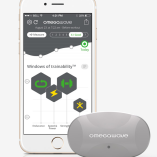 OmegaWave Monitor for Remote Programming
$ 250.00
OmegaWave Monitor for Remote Programming
$ 250.00 -
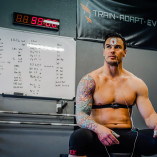 OmegaWave Assessments
$ 75.00–$ 500.00
OmegaWave Assessments
$ 75.00–$ 500.00 -
 T-Shirt
$ 35.00
T-Shirt
$ 35.00
Recent Comments